
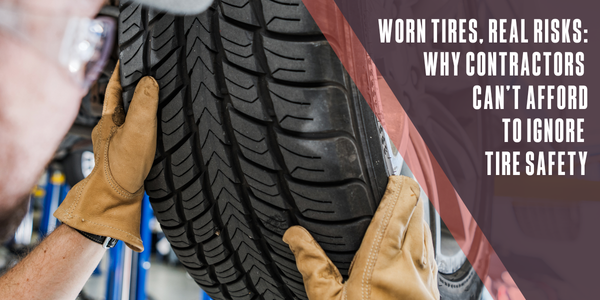
Worn tires, real risks: Why contractors can't afford to ignore tire safety
By Cotney Consulting Group.
The best way to protect your team on the job is to ensure they get there safely in the first place.
In the contracting industry, job site safety usually brings fall protection, PPE or ladder safety to mind. But what about the drive to the site? For many contractors, crews and delivery drivers, the first safety risk of the day begins on the road with the tires under your vehicle.
Tires may not be the flashiest equipment in your operation, but they're among the most critical. Worn, under-inflated or damaged tires increase the risk of blowouts, poor handling, longer stopping distances and accidents. Tire safety is job site readiness for companies that rely on service vehicles, trailers and trucks.
Ignoring tire conditions can lead to missed jobs, downtime, liability or worse, putting lives at risk before the first shingle is even installed.
Why tire safety matters to contracting crews
Contractors rely heavily on work vehicles to move crews, transport materials and haul trailers with tools and equipment. These vehicles are often loaded down, driven across varied terrain and expected to perform under tight deadlines.
When tires are compromised, you're dealing with:
- Reduced traction, especially in rain or debris-covered lots
- Longer braking distances — increasing accident risk
- Sidewall blowouts under heavy loads
- Poor fuel economy from underinflated tires
- Risk of citations or inspections during DOT enforcement
For construction or contracting companies, unsafe tires can lead to more than just delays. They can result in property damage, injury or even fatalities on the road.
What causes premature tire wear?
Understanding why tires wear down helps you take proactive steps to prevent it. Common causes include:
- Underinflation or overinflation: Incorrect pressure causes uneven wear and increases the chance of failure
- Improper wheel alignment: Can lead to "feathering" or bald spots on one side
- Unbalanced loads: Especially on trailers or vans packed with tools and materials
- Rough or uneven terrain: Construction sites, gravel lots or job site debris accelerate wear
- Neglected rotation and maintenance: Tires wear unevenly when not rotated per manufacturer recommendations
Contractors often push vehicles hard. Without consistent inspection, tire wear can sneak up and fail without warning.
How to identify unsafe tires
Here's what every foreperson, driver or field supervisor should be checking regularly:
1 - Tread depth
Use a tread gauge or the penny test. Insert a penny into the tread with Lincoln's head down: If you can see the top of Lincoln's head, the tread is too worn, less than 2/32 inch. Better yet, replace tires before they hit the minimum. Bald tires are dangerous in any weather.
2 - Uneven wear
Inspect all four tires for signs of:
- Bald patches
- Smoother wear on inner or outer edges
- Cupping or dips in the tread pattern
- These can signal alignment or suspension issues.
3 - Visible damage
Check for:
- Sidewall cracks or bulges
- Embedded nails, glass or sharp debris
- Blisters or bubbles these can cause blowouts
Never drive on a damaged or leaking tire.
4 - Air pressure
Use a tire pressure gauge. Check pressure when tires are cold (before driving) and adjust according to the vehicle's spec sheet, which is usually found inside the driver's door.
Improper pressure is one of the leading causes of tire-related accidents.
Best practices for tire safety
Contractors should build tire inspection and maintenance into their operational routine. Here's how:
- Conduct weekly inspections of all company vehicles, including trailers
- Assign responsibility — each driver or crew leader should check tires before heading out
- Document tire checks as part of your vehicle safety logs
- Schedule regular rotations and alignments
- Replace tires in pairs or sets — don't mix old and new tires, especially on dual-axle trailers
- Keep spare tires and patch kits readily available in work vehicles
- Train your crews on how to check the tread, spot damage and read pressure gauges
Don't overload your tires
Construction vehicles and trailers often carry bundles of products, ladders, tools and more. Each tire has a load rating, and exceeding it can lead to overheating and rapid degradation.
To avoid overloading:
- Know your vehicle's Gross Vehicle Weight Rating (GVWR)
- Distribute weight evenly, especially in trailers
- Never load a vehicle beyond what its tires can safely support
- Avoid towing with under-inflated or mismatched tires
When in doubt, scale the load or make an extra trip. A blown tire is more costly than another delivery run.
Tire safety is crew safety
Driving may not be what most people associate with contracting risks, but it's often the first and last danger your crew faces daily. A tire failure at highway speed, a fishtail from worn treads on wet pavement or a trailer accident caused by a blowout can have serious consequences.
It's not just about avoiding flats. It's about keeping your people, equipment and reputation intact.
Check before you roll
Before your crew straps on their harnesses or fires up the kettle, they've already put their safety in the hands of their tires. That's why tire inspections aren't a luxury but a necessity.
Make tire checks a non-negotiable part of your vehicle maintenance program. Train your crews to see the warning signs and act before trouble hits. Because the best way to protect your team on the job is to ensure they get there safely in the first place.
Learn more about Cotney Consulting Group in their Coffee Shop Directory or visit www.cotneyconsulting.com.
Recommended For You
Hand and Power Tool Safety - Part One
Read More ...
7 tips for safely installing snow guards
Read More ...
Enhancing safety with tailgate meetings
Read More ...
UP TO THE MINUTE



Comments
Leave a Reply
Have an account? Login to leave a comment!
Sign In